The Use of Family Trusts
From the Bedroom... To the Boardroom... And Beyond!
Why Every South African Family Should Read This Book
A Trust 101 — written for people who know nothing about trusts
Most people only discover why they needed a Trust after it's too late — after a divorce, a creditor, or an estate duty bill has already taken its toll. This book was written so that doesn't happen to your family.
What Readers Say
"'The Use of Family Trusts' is in fact a Trust 101. I have no doubt that this book will become a go-to resource for anyone — a housewife, student, business person or professional — seeking to gain an understanding of trusts, their applications and benefits."
Hoosen Bobat, B.Comm (FILPA)"I hated to confess that I mistrusted 'trusts', simply because I had no idea what they were... This booklet, it seems, was meant for people like me. Persons that knew zilch about the subject!"
Ebrahim Essa, Author of "Eb Koybie" — from the Foreword"Through his advice, I have gained peace of mind, knowing that my estate is well-structured... I recommend him wholeheartedly to anyone who wishes to plan wisely, protect their family, and leave behind peace rather than conflict."
Adam Moosa, Director, Sanola HoldingsWhy This Book Will Convince You That You Need a Trust
Most books on trusts are written for lawyers and accountants. This one is written for the housewife, the student, the small-business owner — anyone who has never opened a trust deed in their life, and is proof of it.
What makes it persuasive isn't legal theory — it's forty years of real case studies. Hoosen Agjee has drafted hundreds of trust deeds, and he uses that experience to show, again and again, what happens to families who plan ahead and families who don't.
Take "Joe": in 1985 he understood he needed a Trust, but he procrastinated for a decade. By 1995, his assets had ballooned in value and one of his sons had already run into financial trouble, encumbering some of the family's property. His Trusts were eventually formed — but at "a huge cost and loss" that could easily have been avoided. Compare that to Abie, who moved his assets into a Trust early: his family kept the income, and when his own son later ran into business trouble, the family's assets were untouchable.
The book's central insight is one most people never realise until it's explained plainly: placing an asset in a Trust does not mean losing it. By serving as a Trustee alongside your family, you continue to help manage the very assets you've "given away" — while your family enjoys the protection of a separate legal entity that a Beneficiary's creditors, an ex-spouse, or the Guardian's Fund cannot reach.
And it isn't only about protection and tax. As Adam Moosa writes in his foreword, fair distribution of a family's wealth is never perfectly equal — "just as when an orange is cut into four pieces, one may yield a little less juice than another." What a well-structured Trust offers is a framework for that fairness to be honoured without dispute, long after the person who built the wealth is gone.
"There is no 'right time' to form a Trust... As time passes and their assets increase in value... it may be too costly to move assets into a Trust. The right time to form a Trust is NOW."
Extracts From the Book
A few of the passages, diagrams, and tables that make the concepts click.
"A Trust is a unique entity in that a person (the Donor) can move his assets away from himself to the Trust. Although the income and the assets of the Trust are for the benefit of third parties (the Beneficiaries) yet the Donor together with his fellow Trustees maintains administrative control over these assets."
The definition is deliberately wide — it isn't limited to people.
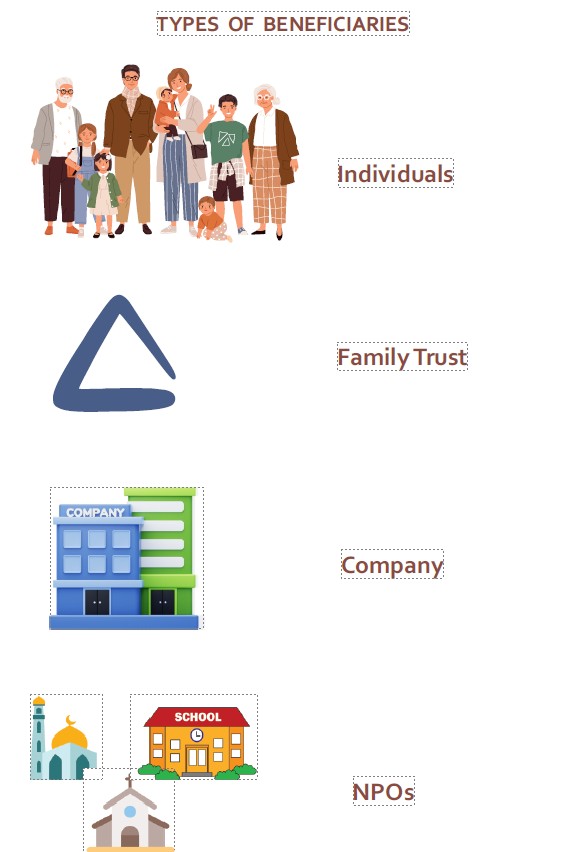
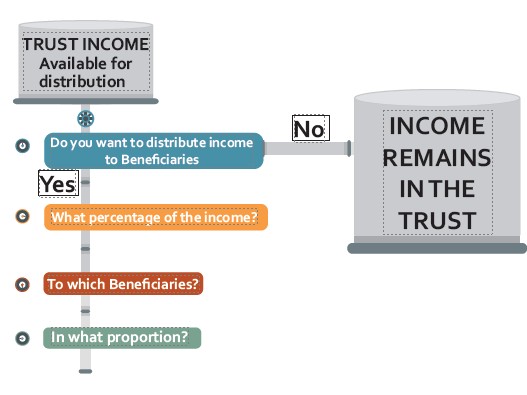
In a discretionary Trust, every distribution follows the same decision path — laid out plainly in the book:
"A Trust is unique as it allows for the distribution of the net income and capital to the Beneficiaries although they have not contributed anything to the Trust... Even a toddler, who is a Beneficiary, can be given income/capital from the Trust."
| Structure | Recipient | Losses |
|---|---|---|
| Company | Must be a shareholder | Remain in the company |
| Partnership | Must be a partner | Borne by the partners |
| Sole Proprietor | The owner only | Borne by the owner |
| Trust | Any Beneficiary — need not contribute | Remain in the Trust |
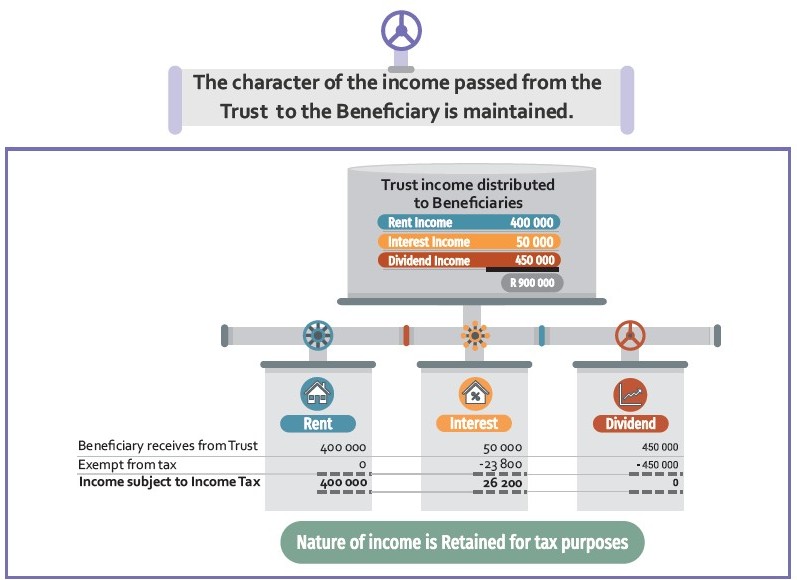
Rent stays rent, interest stays interest, dividends stay dividends — right through to the Beneficiary:
"By putting the assets in a Trust, dad's saved us R1.8 million in Estate Duty!!"
Same R1m asset, grown to R10m — R1.8m saved by holding it in a Trust.
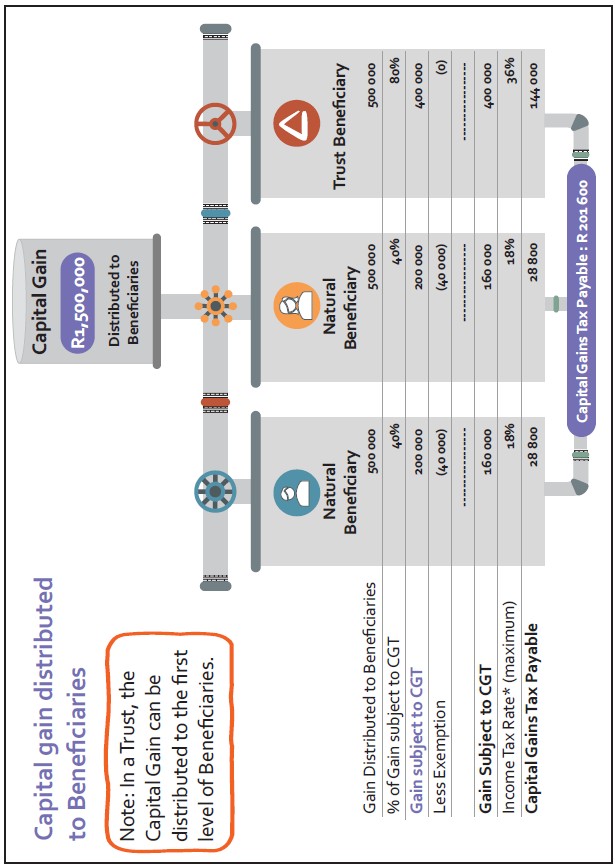
A R1,500,000 capital gain, taxed two ways — kept in the Trust, or passed through to Beneficiaries:
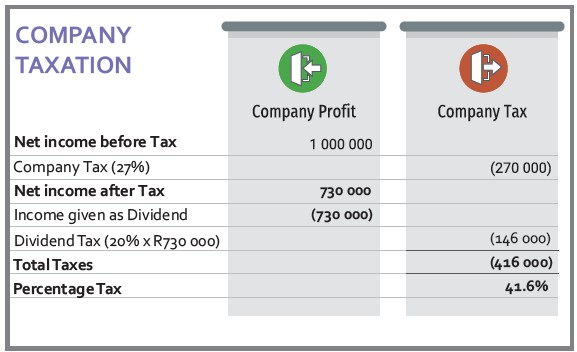
The book puts the numbers next to each other so there's no argument about which structure is really taxed harder:
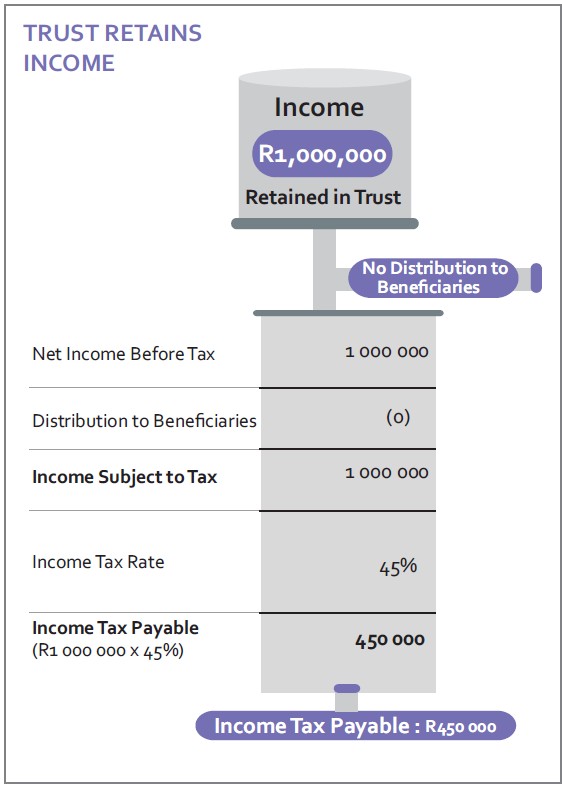
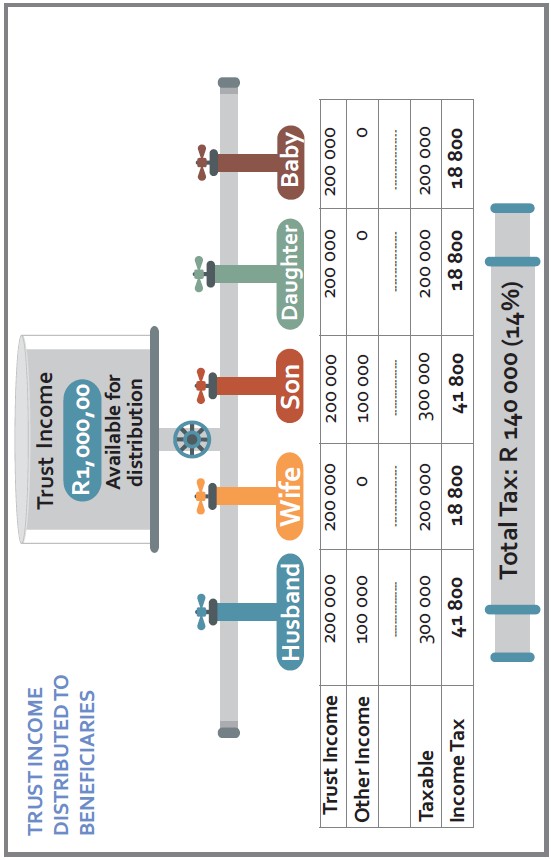
This is the page that changes minds. R1,000,000 of Trust income, split five ways instead of landing on one person:
"The day when the creditor wanted to attach the son's assets, he could not attach the trust assets (which at that time was worth R10m). The creditor could only attach the R1m beneficiary's loan account. In this way the beneficiary's asset that was held by the trust was protected."
"Families must accept that not every share will appear exactly equal — just as when an orange is cut into four pieces, one may yield a little less juice than another. But with compassion, fairness, and Barakah, harmony will prevail. Where families quarrel, Barakah is lost; where they cooperate, Allah places blessings."
What You'll Learn Inside
- 1. What Is a Trust — the parties, forming an inter-vivos Trust
- 2. Trustees — choice, obligations, powers, liability
- 3. The Beneficiaries — defining them, protecting minors, creditors, divorce
- 4. The Trust Deed — what it must contain, amending it
- 5. Unique Features of a Trust — flow-through, asset protection, estate duty, CGT, income tax
- 6. Activating the Trust — donating, selling, bequeathing assets to it
- 7. Special Trusts — for beneficiaries with disabilities or special needs
- 8. Charity Trusts — formation, PBO status, tax benefits
- 9. Islamic Endowments (Waqf) — family and hybrid endowments
- 10. Record Keeping — minutes, accounting basics
- 11. The End or the Beginning — closing thoughts
Special Trusts & Islamic Endowments (Waqf)
Not every family's planning looks the same, and two of the book's chapters go further than the standard Family Trust to meet needs many readers won't find covered anywhere else.
Chapter 7 — Special Trusts
The book opens this chapter with a dilemma many parents of a child with a disability never say out loud: do they appoint a curator — a paid outsider — or trust their own family to manage their child's finances? A Special Trust is Hoosen Agjee's answer.
- Special Type-A Trust — for the lifetime benefit of a person whose disability stops them from earning a living or managing their own affairs. Can be set up during your lifetime, in your Will, or by court order.
- Special Type-B Trust — created in a deceased person's Will purely for minor relatives who are still under 18.
- Both enjoy real tax relief: taxed at the Beneficiary's own progressive rate instead of the flat 45% trust rate, maintenance costs are deductible, distributions are exempt from Donations Tax, and the assets fall outside the Beneficiary's estate for Estate Duty.
- Type-A Trusts add further Capital Gains Tax relief — including the R2m primary residence exemption and CGT calculated on only 40% of the gain, rather than 80% for an ordinary trust.
"Parents are in a dilemma whether to get a curator... or do they entrust their child's finances to their family members?"
Chapter 9 — Islamic Endowments (Waqf)
For Muslim families, Chapter 9 turns to a centuries-old institution: the Waqf — the permanent dedication of property for a religious, pious, or charitable purpose. The capital is preserved forever; only the income it generates may ever be used.
- Family Waqf — income supports the Donor's own family during their lifetimes, then passes to a mosque or charitable cause afterwards. Because the property no longer belongs to the Donor, it falls outside Islamic inheritance law — useful for families with only daughters, adopted children, or no children at all.
- Hybrid Waqf — serves both the family and a charitable cause from the very outset, though it cannot register as a Public Benefit Organisation.
"Property placed in a Waqf are not subjected to Islamic Inheritance Laws."